I found issue #2 of Batman. Since I did not find issue #1, I have to go along with the old idea that every issue is accesssible, even in a chapter of a long arc (it rarely ever is, only in the sense that you observed some things that have happened).
We get a new villain, The Court of Owls...that sounds more like a Daredevil antagonist to me - he has a villain named the Owl, and he could use better villains...why not The Court Of Bats? Whatever. They've got it in for Bruce Wayne, and we get a neat sequence where Bruce Wayne (Batman) gets pushed out the window of his office building (a location which is always featured in the comics but never used in the films or tv series, possibly because of its egg-shaped peak, like a kind-of rejected design for the Daily Planet building). He survives the fall in a way that pays off the wordy (in teeny tiny print) first page.
We get a interesting action sequence involving some stolen statues aboard a helicopter with Batman following on motorcycle that I guess the writer was bored with, because he ends it abruptly, but I thought it was more entertaining then this dull CSI scene with an autopsy that was run-of-the-mill, oh, and a Nightwing cameo (in which we are reminded that he still exists in this new continuity) and a very dull character named Lincoln March, who willl join Tommy Monahan in the Batman-villains-who-introduce-themselves-in-their-civillian-guise-first category - but if I'm wrong, then hats off to Scott Snyder.
What we're left with is mostly middle and set-up. I wonder if the 1st issue had anything going on at all - was it just Batman swinging around, doing his "I am the Night" schtick before finding a dead body on the last page? We get a preview of a Batman Graphic Novel, Noel, which reads like a story I might have read before, but New-er-er or "Like New". What does work is the art. If the script seemed leaden, the art never lets on that it is, and Greg Capullo gives Gotham a look that reminded me of old Legends Of The Dark Knight comics from the late-80's-early-90's
I remember joking that once Grant Morrison was off the Bat-books, the tone and format of the comics would go back to the 90's Batman, which had him going after street gangs, ersatz Fu-Manchu/Mola-Ram types and beefed-up thugs with gimmick names...well, it's back, and we can expect a rematch with Bane next spring.
Friday, October 21, 2011


Friday, October 14, 2011
Yellow Journalism: Trouble on Mt.Olympus- Comic Book Rehab, Yellow Cover, Issue #1
Another year, another contract dispute. All the Simpsons cancellation rumors got me thinking about brushing up my Simpsons history, so I checked out a book, The Simpsons: An Uncensored, Unauthorized History. Like an Apocryphal Bible, I dive in to read what I haven't read before.
Now it turns out the show has been renewed for two more seasons - what to do? Well, there is something amiss - a mystery! I'll solve it! Why do people complain so much about the decline in quality of the show? My only clue will be John Ortved's book.
Fact: The show's creator, Matt Groening, isn't quite as (or, to put it dangerously, never was) involved in the day-to-day output of the show's production. In fact, according to the book, he's much more involved in the cottage industry of Simpsons merchandising and stamping his signature on it. The book makes no mention of Bongo comics, the company he owns which has published Simpsons (and Futurama) comics and is currently approaching its 20th year in business. Next to Image comics, it is one of the few, true success stories of the comic book marketplace in the 1990's.
Fact: The job of showrunner (the top banana among the writers who serves as chief wrangler) has been held by Al Jean for nearly a decade, the longest time served in the show's history. In the past, showrunners served an average of two years. Mike Scully (who ran the show before Jean), served for four. Although it is a cartoon, The Simpsons is a show where the writers are the driver and engine, and the book hints that during Jean's tenure the quality of the scripts have softened the show's edge and the spontaneity has been lost. In the past, the show had a small, but talented circle of writers working in a single room. Today, the show has many writers working out of two conference rooms (between the lines, Ortved is hinting that the episodes now have a watered-down, written-by-committee feel that may be the real cause of what's happening).
Fact: The upstart competition is outpacing the forerunners. Ortved is no fan of Family Guy, but he admits the show's popularity (and that of creator Seth MacFaarlane) are echos of The Simpsons glory days in the early 90's.
Fact,fact, fact,fact...
Conclusion: My conclusion is something that Ortved neglected to mention and is staring him right in the face. The Simpsons are no longer a gimmick. When the show premiered, people ooh and aah'd the return of the prime-time animated sitcom. When the show became popular in the early years, they had a merchandising feast and wow'd over that. When the show became a launchpad for a number of writers who went on to have successfull careers launching their own shows, the show became established. When the show spawned imitators, upstarts, rip-offs and parodies, the show became a class act. When Celebrities began appearing on the show (and never stopped), it became trendy to people in the mainstream media and no longer required persuasion to watch it. When the movie came out, people wondered what took so damn long.
We're waiting for something new to talk about - a new gimmick concern to lump the show under. I believe that a show's lifespan has its own rite of passage, and when it runs as long as the Simpsons, people begin to look at it as if it achieved Godhood - to cancel it would be unthinkable. Really? Are we really bored with the show, or is the show bored with its audience? That is the question...the question that has not been asked...the question that might bring the end of all things... yellow... ;)
By the way, I did enjoy the book, especially the profiles of Groening, Sam Simon, George Meyer and John Swartzwelder, whose books are hard to find (aren't hard-to-find books the kind that should be available in public libraries?). That is the question...the question that has not been asked...the question that might bring the end of all things...
I am curious (yellow)! ;) 
Now it turns out the show has been renewed for two more seasons - what to do? Well, there is something amiss - a mystery! I'll solve it! Why do people complain so much about the decline in quality of the show? My only clue will be John Ortved's book.
Fact: The show's creator, Matt Groening, isn't quite as (or, to put it dangerously, never was) involved in the day-to-day output of the show's production. In fact, according to the book, he's much more involved in the cottage industry of Simpsons merchandising and stamping his signature on it. The book makes no mention of Bongo comics, the company he owns which has published Simpsons (and Futurama) comics and is currently approaching its 20th year in business. Next to Image comics, it is one of the few, true success stories of the comic book marketplace in the 1990's.
Fact: The job of showrunner (the top banana among the writers who serves as chief wrangler) has been held by Al Jean for nearly a decade, the longest time served in the show's history. In the past, showrunners served an average of two years. Mike Scully (who ran the show before Jean), served for four. Although it is a cartoon, The Simpsons is a show where the writers are the driver and engine, and the book hints that during Jean's tenure the quality of the scripts have softened the show's edge and the spontaneity has been lost. In the past, the show had a small, but talented circle of writers working in a single room. Today, the show has many writers working out of two conference rooms (between the lines, Ortved is hinting that the episodes now have a watered-down, written-by-committee feel that may be the real cause of what's happening).
Fact: The upstart competition is outpacing the forerunners. Ortved is no fan of Family Guy, but he admits the show's popularity (and that of creator Seth MacFaarlane) are echos of The Simpsons glory days in the early 90's.
Fact,fact, fact,fact...
Conclusion: My conclusion is something that Ortved neglected to mention and is staring him right in the face. The Simpsons are no longer a gimmick. When the show premiered, people ooh and aah'd the return of the prime-time animated sitcom. When the show became popular in the early years, they had a merchandising feast and wow'd over that. When the show became a launchpad for a number of writers who went on to have successfull careers launching their own shows, the show became established. When the show spawned imitators, upstarts, rip-offs and parodies, the show became a class act. When Celebrities began appearing on the show (and never stopped), it became trendy to people in the mainstream media and no longer required persuasion to watch it. When the movie came out, people wondered what took so damn long.
We're waiting for something new to talk about - a new gimmick concern to lump the show under. I believe that a show's lifespan has its own rite of passage, and when it runs as long as the Simpsons, people begin to look at it as if it achieved Godhood - to cancel it would be unthinkable. Really? Are we really bored with the show, or is the show bored with its audience? That is the question...the question that has not been asked...the question that might bring the end of all things... yellow... ;)
By the way, I did enjoy the book, especially the profiles of Groening, Sam Simon, George Meyer and John Swartzwelder, whose books are hard to find (aren't hard-to-find books the kind that should be available in public libraries?). That is the question...the question that has not been asked...the question that might bring the end of all things...
I am curious (yellow)! ;)

Thursday, October 6, 2011
It's How We Play The Game - Comic Book Rehab - issue #1 (2nd printing)
I haven't reviewed any issues of the DC relaunch because I was away from the shops last month. I thought, "No Problem!, I can stop by anytime and they'll have SOMETHING." Boy, I was wrong.
I was right, too - there were plenty of comics to buy - just none of the DC #1's. Why is that?
No, it's not because everybody bought them - when you hear that a comic book sold out, they're refering to comic shops buying all the copies that were printed. All the sales figures buzzed about online are just that. So what's really happening? The shops are hoarding.
The way to increase demand on a large supply is to ration it and make it seem scarce, then create a demand for reprint editions to be printed quickly and sold quickly. The 1st editions can be resold as back issues for 2 or 3 times the cover price, depending on popularity. The little guys (us, the shoppers, the fans, the man in the suit, or the kid or parent thinking of this stuff as investments) won't mind because it only helps lift the value of what they have bundled and sealed or slabbed in their closet or drawer or trunk or wherever.
The flaw in this reasoning is that the market for comics has dwindled into a subculture. You can be a fan of these characters and still never have read a comic book. If the demand declines for various reasons, then the issues you've been hoarding in the back of the shop deteiorate into sales slime, and that's how you end up with brand new, pristine 1st issues in quarter/half-dollar/dollar bins at shops and conventions, or online sellers posting lots of copies in one bundle for auction.
Another problem - the values are for trade - you can still go to a shop and the owner will still offer to buy your collection for a dime per book. The numbers you hear about are the comics value bartered for stacks of comics, plus some cash (if any) that adds up to that much. So, yes, it is possible that that copy of Amazing Spider-Man #1 from 1998 that you bought for $20.00 cash is actually what it trades for. Well, if you see something you really like...
So...if you're hungry for those new #1's that came out - as a reader, wait for the reprint edition. If you're a collector, you could save up to buy the original 1st edition #1's instead. This gimmick ... every new #1 issue offered never seems as old and rare as the first from long before our time...
See, this is why we need Lara Croft. The next Tomb Raider film should be about finding some cache of old comics...never mind dusty old temples of made-up gold. Actually that could be the plot of National Treasure 3 - Harry Truman's secret stash.
I was right, too - there were plenty of comics to buy - just none of the DC #1's. Why is that?
No, it's not because everybody bought them - when you hear that a comic book sold out, they're refering to comic shops buying all the copies that were printed. All the sales figures buzzed about online are just that. So what's really happening? The shops are hoarding.
The way to increase demand on a large supply is to ration it and make it seem scarce, then create a demand for reprint editions to be printed quickly and sold quickly. The 1st editions can be resold as back issues for 2 or 3 times the cover price, depending on popularity. The little guys (us, the shoppers, the fans, the man in the suit, or the kid or parent thinking of this stuff as investments) won't mind because it only helps lift the value of what they have bundled and sealed or slabbed in their closet or drawer or trunk or wherever.
The flaw in this reasoning is that the market for comics has dwindled into a subculture. You can be a fan of these characters and still never have read a comic book. If the demand declines for various reasons, then the issues you've been hoarding in the back of the shop deteiorate into sales slime, and that's how you end up with brand new, pristine 1st issues in quarter/half-dollar/dollar bins at shops and conventions, or online sellers posting lots of copies in one bundle for auction.
Another problem - the values are for trade - you can still go to a shop and the owner will still offer to buy your collection for a dime per book. The numbers you hear about are the comics value bartered for stacks of comics, plus some cash (if any) that adds up to that much. So, yes, it is possible that that copy of Amazing Spider-Man #1 from 1998 that you bought for $20.00 cash is actually what it trades for. Well, if you see something you really like...
So...if you're hungry for those new #1's that came out - as a reader, wait for the reprint edition. If you're a collector, you could save up to buy the original 1st edition #1's instead. This gimmick ... every new #1 issue offered never seems as old and rare as the first from long before our time...
See, this is why we need Lara Croft. The next Tomb Raider film should be about finding some cache of old comics...never mind dusty old temples of made-up gold. Actually that could be the plot of National Treasure 3 - Harry Truman's secret stash.
Tuesday, September 27, 2011
Why Do We Need A Masked Manhunter? Comic Book Rehab Relaunch Issue #1
People still ask, "If you had any superpower, which one would it be?" Meanwhile, the most successful superhero is a guy who has no powers. Actually, he does have a power, the most powerfull of all.
Batman's been around for over 70 years - he's been played in live-action by seven different actors, he's starred in a bunch of cartoons, had his face plastered all over merchandise, and supports a whole line of comics - a "Batman Family" of books - within DC's line, for over the last 20 years.
Some credit this success to the fact that he's a very flexible character - open to differnet interpretations, yet never inconsistant; no matter how light or dark the portrayal, he remains Batman. How is this possible? I suspect it has a lot to do with the fact that his origin came sometime after he was introduced, and when you're working backwards like that, it means you have a concept first, and when that happens, it's possible to go any which way you please, because the backstory came later. That's how you wind up with the giant props, the cheery sidekicks, magic creatures, crazy costumes, goofy adversaries - the whole bit. Strip away all these elements and you can still tell Batman stories. Add in more elements and you can still tell Batman stories. He's still The Dark Knight. And The Caped Crusader. And The Masked Manhunter. And The World's Greatest Detective.
There are disagreements as to which interpretation is considered proper Batman. Some think it's the recent movies directed by Christopher Nolan. Others believe it's the popular cartoons from the last two decades, which feature a fully-realized Batman that outclasses the one that appeared in comics simultaneously. Some say it's the Batman of the 1st Tim Burton film. Some people think it's the Saturday morning Batman that hanged out with Scooby Doo and the Superfriends.
And there are many that think Adam West is still the best Batman - event though that show has been written off as a spoof. Use of the word "spoof" seems recent to me - just a way to give it a place on the shelf. Personally, any time I've picked up a book reprinting Batman comics from the 40's-60's, I've found the writing to be no different in execution than the show, save for a few knowing winks and nods to the audience. The same goes for the Superfriends - it may have been a spinoff of Scooby Doo, but the Justice League comics were not too different from the show, save for it being overrun with 2nd and 3rd string characters.
Why is it that one interpretation never stomps out the others? I recall Batman's light blue and grey costume lasted well into the mid-90's, and still appears in merchandise, and in a recent cartoon, 'Batman: The Brave and The Bold" which offers a light and fun Batman. Maybe the light and fun Batman seems more human than the Dark Knight. Maybe a lighter touch can endure the ridiculous merchandising demands and ebb and flow of audience tastes better than Mr. Serious. Is the Dark Knight fun for a dreary Sunday afternoon?
Regeneration is quite an amazing superpower - do you think he was bitten by a radioactive bat? That's a story that'll never be told. 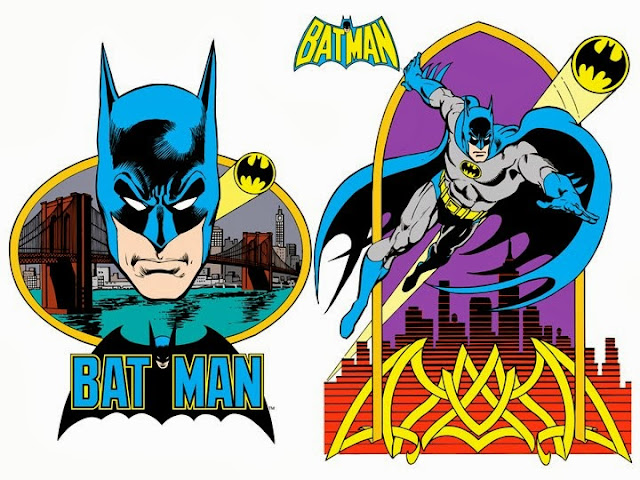
Batman's been around for over 70 years - he's been played in live-action by seven different actors, he's starred in a bunch of cartoons, had his face plastered all over merchandise, and supports a whole line of comics - a "Batman Family" of books - within DC's line, for over the last 20 years.
Some credit this success to the fact that he's a very flexible character - open to differnet interpretations, yet never inconsistant; no matter how light or dark the portrayal, he remains Batman. How is this possible? I suspect it has a lot to do with the fact that his origin came sometime after he was introduced, and when you're working backwards like that, it means you have a concept first, and when that happens, it's possible to go any which way you please, because the backstory came later. That's how you wind up with the giant props, the cheery sidekicks, magic creatures, crazy costumes, goofy adversaries - the whole bit. Strip away all these elements and you can still tell Batman stories. Add in more elements and you can still tell Batman stories. He's still The Dark Knight. And The Caped Crusader. And The Masked Manhunter. And The World's Greatest Detective.
There are disagreements as to which interpretation is considered proper Batman. Some think it's the recent movies directed by Christopher Nolan. Others believe it's the popular cartoons from the last two decades, which feature a fully-realized Batman that outclasses the one that appeared in comics simultaneously. Some say it's the Batman of the 1st Tim Burton film. Some people think it's the Saturday morning Batman that hanged out with Scooby Doo and the Superfriends.
And there are many that think Adam West is still the best Batman - event though that show has been written off as a spoof. Use of the word "spoof" seems recent to me - just a way to give it a place on the shelf. Personally, any time I've picked up a book reprinting Batman comics from the 40's-60's, I've found the writing to be no different in execution than the show, save for a few knowing winks and nods to the audience. The same goes for the Superfriends - it may have been a spinoff of Scooby Doo, but the Justice League comics were not too different from the show, save for it being overrun with 2nd and 3rd string characters.
Why is it that one interpretation never stomps out the others? I recall Batman's light blue and grey costume lasted well into the mid-90's, and still appears in merchandise, and in a recent cartoon, 'Batman: The Brave and The Bold" which offers a light and fun Batman. Maybe the light and fun Batman seems more human than the Dark Knight. Maybe a lighter touch can endure the ridiculous merchandising demands and ebb and flow of audience tastes better than Mr. Serious. Is the Dark Knight fun for a dreary Sunday afternoon?
Regeneration is quite an amazing superpower - do you think he was bitten by a radioactive bat? That's a story that'll never be told.

Friday, September 2, 2011
Supergods by Grant Morrison - Book Review
Grant Morrison is an interesting case. He was part of the British Invasion of comic book writers in the 1980's (with Frank Miller as their token Yankee), and his work at the time didn't quite grab attention like Alan Moore or Neil Gaiman, but he's the last man standing. Alan Moore became the modern day Howard Hughes, Gaiman became a bestselling author and screenwriter, recently getting positive marks for writing an episode of Doctor Who. This year Morrison has managed to complete his opus, Supergods, which he often hinted at in interviews over the past few years as being a survey of Superheroes and how people read them, as well as cobbling together a lot of the rhetoric about their popularity which often appeared in bits and bobs in many of his interviews.
Morrison's work can be described in two categories - stories that use structure: there's a beginning, a middle, and an end, the audience is hip to what's going on, the characters are in fine form; then there are stories that consist of moments: cause-and effect built around high-concept metaphysics. These are stories that approach the character as a concept, with reflections that play off representative samples of how they were portrayed over decades, as well as creating suspense about the nature of the world/universe/hyper reality that serves as their backdrop/soundtrack, decompressed into a 30/40-issue arc. This approach is the more ambitious, often sabotaged by modern scriptwriting. Stories like Seven Soldiers, Batman R.I.P, Final Crisis, and Batman: The Return of Bruce Wayne feel rushed and incoherent, making more sense in talk back interviews. Final Crisis felt like a typical Zombie/Vampire movie with a tired superhero/supervillain twist and not very interesting, but it was only upon reading Supergods that there was a more intriguing undertow that should have been front-and-center. It was as if Grant had been stretched thin and had to move on to his next "big event thing", his next wide screen comic book epic.
Two things Morrison neglected to mention in his book had me curious. In 2000, having completed a successful run redefining the long-running, but often mediocre mainstay, Justice League of America, as well as wrapping his creator owned title, The Invisibles, Grant claimed he was through working with DC, believing that concepts he created for The Invisibles had been ripped-off by the Matrix franchise. He then began a four-year tenure with Marvel, headlined by an interesting run on the book New X-Men that ran out of gas very quickly. Then he returned to DC. I guess he got over it - he makes no mention of the fit in particular, except perhaps with a wink when he recalls seeing the Matrix and describing his work on The Invisibles.
The other thing was a series of ads for Calvin Klein jeans that appeared on the back covers of Marvel comics a few years back. After giving Rob Liefeld a poke in the ribs for starring in a Levis jeans commercial in the 90's, I suppose Morrison couldn't find a way to make his celebrity (and that of his cronies, contemporaries, and upstart proteges) distinguishable from Rob's (and the founders of Image comics) without his reasoning falling apart.
He describes his work a lot here. For this book is a memoir disguised as a history lesson - yet that's what it does, it offers the history of Superheroes as the soundtrack to Grant Morrison's life and his universe. For within these pages, these so-called "Supergods" are his muse - his theories about life, the universe, and everything have some connection to the characters that only exist on printed paper, on TV screens, as merchandise, and the cinema. He runs the risk of making mountains out of molehills and coming off glib, but once you realize that he's offering insight into how he works, then the book becomes more interesting for it. We rarely get a chance to pick inside the brain of a popular author, see what makes him tick, and look forward to his next project with greater insight into the origins of his imagination.
In lesser hands, this book would've been an ego trip - many will see it that way. Morrison is still playing his cards close, but he's letting us take a quick peak at his hand. For now, anyway. It's worth a look.
Take Care.
Morrison's work can be described in two categories - stories that use structure: there's a beginning, a middle, and an end, the audience is hip to what's going on, the characters are in fine form; then there are stories that consist of moments: cause-and effect built around high-concept metaphysics. These are stories that approach the character as a concept, with reflections that play off representative samples of how they were portrayed over decades, as well as creating suspense about the nature of the world/universe/hyper reality that serves as their backdrop/soundtrack, decompressed into a 30/40-issue arc. This approach is the more ambitious, often sabotaged by modern scriptwriting. Stories like Seven Soldiers, Batman R.I.P, Final Crisis, and Batman: The Return of Bruce Wayne feel rushed and incoherent, making more sense in talk back interviews. Final Crisis felt like a typical Zombie/Vampire movie with a tired superhero/supervillain twist and not very interesting, but it was only upon reading Supergods that there was a more intriguing undertow that should have been front-and-center. It was as if Grant had been stretched thin and had to move on to his next "big event thing", his next wide screen comic book epic.
Two things Morrison neglected to mention in his book had me curious. In 2000, having completed a successful run redefining the long-running, but often mediocre mainstay, Justice League of America, as well as wrapping his creator owned title, The Invisibles, Grant claimed he was through working with DC, believing that concepts he created for The Invisibles had been ripped-off by the Matrix franchise. He then began a four-year tenure with Marvel, headlined by an interesting run on the book New X-Men that ran out of gas very quickly. Then he returned to DC. I guess he got over it - he makes no mention of the fit in particular, except perhaps with a wink when he recalls seeing the Matrix and describing his work on The Invisibles.
The other thing was a series of ads for Calvin Klein jeans that appeared on the back covers of Marvel comics a few years back. After giving Rob Liefeld a poke in the ribs for starring in a Levis jeans commercial in the 90's, I suppose Morrison couldn't find a way to make his celebrity (and that of his cronies, contemporaries, and upstart proteges) distinguishable from Rob's (and the founders of Image comics) without his reasoning falling apart.
He describes his work a lot here. For this book is a memoir disguised as a history lesson - yet that's what it does, it offers the history of Superheroes as the soundtrack to Grant Morrison's life and his universe. For within these pages, these so-called "Supergods" are his muse - his theories about life, the universe, and everything have some connection to the characters that only exist on printed paper, on TV screens, as merchandise, and the cinema. He runs the risk of making mountains out of molehills and coming off glib, but once you realize that he's offering insight into how he works, then the book becomes more interesting for it. We rarely get a chance to pick inside the brain of a popular author, see what makes him tick, and look forward to his next project with greater insight into the origins of his imagination.
In lesser hands, this book would've been an ego trip - many will see it that way. Morrison is still playing his cards close, but he's letting us take a quick peak at his hand. For now, anyway. It's worth a look.
Take Care.
Tuesday, August 9, 2011
No $#!+, Sherlock. - Comic Book Rehab Dime Novel, Issue #1
When people talk of adapting and updating Sherlock Holmes, they're really talking about the films. Whenever you see a new Holmes film with Watson and Lestrade left in the dust, that's not Conan Doyle, that's Rathbone and Bruce. Curiously, the only time the 'canon' was ever faithfully adapted was when the late Jeremy Brett played Holmes in the !980's and early 90's in a series for British television that found its audience here in the USA on MYSTERY!. That's the exception.
Never mind exceptions, let's talk PERCEPTIONS. The new series of Sherlock Holmes adaptations is based on that. The new films with Robert Downey Jr. are taking their cues from Billy Wilder's "The Private Life Of Sherlock Holmes" by completely embracing the 'friends of Giuliano' rumors. Kingsley Amis, in his essay "Unreal Policemen", wrote that the magnifying glass and the dozen roses belong to two different worlds. Sherlock Holmes with a girlfriend gets in the way of solving the puzzle, so he has no girlfriend, but as a consequence, his "buddy" becomes more than his creator imagined. People read too much, don't they? The character and the stories were popular enough to inspire a cottage industry of imitators - all following the same approach, all stuck with alleged 'bachelors-in-the-closet' in thinly-realized worlds of their own, and the rise of the 'hard-boiled' school becomes its opposite number, with strong emphasis on the "one girlfriend a book" rule that Ian Fleming established in the Bond novels. That doesn't mean no fan hasn't tried to dig further than the surface...
Back to Holmes. The new Sherlock series with Cumberbatch (which really sounds like something you have to look for in the supermarket aisle) is not bad, even if it borrows heavily from Doctor Who - both have the hero/villain showdowns - and the use of the internet and smartphones seems forced (Holmes relied a lot more on logical inferences than that showy parlour trickof deducing a man's profile his hat, but the use of maps is acurrate). The first adventure really got rolling with the final confrontation, the second was a little too Fu Manchu-y, and I have not seen the last, in which Moriarty is revealed to be a nondescript guy in a suit with a smug smirk. Ooo, those nondescript baddies...
To be continued... (really? yeah. I'm gonna find the thrid story. Hold your breath) ;)
Never mind exceptions, let's talk PERCEPTIONS. The new series of Sherlock Holmes adaptations is based on that. The new films with Robert Downey Jr. are taking their cues from Billy Wilder's "The Private Life Of Sherlock Holmes" by completely embracing the 'friends of Giuliano' rumors. Kingsley Amis, in his essay "Unreal Policemen", wrote that the magnifying glass and the dozen roses belong to two different worlds. Sherlock Holmes with a girlfriend gets in the way of solving the puzzle, so he has no girlfriend, but as a consequence, his "buddy" becomes more than his creator imagined. People read too much, don't they? The character and the stories were popular enough to inspire a cottage industry of imitators - all following the same approach, all stuck with alleged 'bachelors-in-the-closet' in thinly-realized worlds of their own, and the rise of the 'hard-boiled' school becomes its opposite number, with strong emphasis on the "one girlfriend a book" rule that Ian Fleming established in the Bond novels. That doesn't mean no fan hasn't tried to dig further than the surface...
Back to Holmes. The new Sherlock series with Cumberbatch (which really sounds like something you have to look for in the supermarket aisle) is not bad, even if it borrows heavily from Doctor Who - both have the hero/villain showdowns - and the use of the internet and smartphones seems forced (Holmes relied a lot more on logical inferences than that showy parlour trickof deducing a man's profile his hat, but the use of maps is acurrate). The first adventure really got rolling with the final confrontation, the second was a little too Fu Manchu-y, and I have not seen the last, in which Moriarty is revealed to be a nondescript guy in a suit with a smug smirk. Ooo, those nondescript baddies...
To be continued... (really? yeah. I'm gonna find the thrid story. Hold your breath) ;)
Wednesday, August 3, 2011
September Scrimmage - DC's Previews - Comic Book Rehab :Special issue #0
Last month, comic book stores gave away (well, I'm assuming YOUR STORE gave it away) free copies of a preview of the September relaunch, which is spining out of this summer's Crossover, FLASHPOINT. One thing I can tell you, the price point is still 3 bucks for most of the books. I'll come up with other usefull observations...
They look alike/they talk alike? - The solicitation form the new comic RED HOOD AND THE OUTLAWS hints that Red Hood (Jason Todd) is starting to act a lot like Grifter from the Wildcats.
Green Arrow - everyone's favorite writer, J.T. Krul is back with a new take on Oliver Queen. The murky "Watcher in the woods" angle is gone, replaced with a "World's Policeman" angle. And trick arrows. And Dan Jurgens on art, but a nice cover by Brett Booth. I hate when we have no clue what's inside but get nice art on the outside. It's like Boom!'s Ducktales comics - the covers by Leonel Castellini are fantastic, but they do not reflect what's happening inside - that's like false advertising. The inside is kind of like what a Gold Key Ducktales comic would've looked like if that company had survived.
Justice League - 2 books, one attempting a comeback with the late 80's-era league - sans Ted Kord, & BIG sucka', with Jim Lee art, that seems to be carrying this leaked-out angle that a big reset button has been pressed and, ... well, these are the only kinds of stories anyone knows how to tell anymore - origins, deaths, rebirths, weddings, funerals, godlike a-holes who shout dull speeches, zombies, and obnoxius awkward teenagers, which reminds me...
They're trying again with Blue Beetle - poor Jaimie. They try and try and puch and push and the only fans you've got are that little old spanish lady who (according to an anecdote by the character's creators) thought it was wonderful to have a latino superhero for kids to look up to. See, Jaime's got groupies - little old spanish ladies who'll buy his comic for their kids...who'll wonder why they didn't get Batman or Spider-Man comics, instead. Oh, and fans of Nova, the human rocket, who I'm convinced is the template for this incarnation of Blue Beetle - they'll be picking up the book too, just for the sake of remembering how 'cool' Nova was and maybe if they buy this, then Marvel will try a reviving Nova again. Yeah,yeah, that's the ticket.
Oh, and Superman. They've been wanting to erase his marriage to Lois Lane for years and years, and now they've got it, but that was the most distinctive element of the comics - you don't see a married Lois and Clark potrayed anywhere else in the media for any long period of time, so the comic will REALLY have to entertain us with a status quo that goes beyond dodging bullets and hoping over traffic.
Oh, and that guy with the bat ears. Batman gets to be just Bruce Wayne, again. Batgirl gets to be Barbara Gordon again. Damien gets to still be Robin. No clue on whether the book will go back to rehashing old "NYPD Blue" or disaster movie scripts like in the past. At least Converse like Batman's blue costume.
Oh, and there's a bunch of other books I didn't get to because there's too many that look like cannon fodder at the moment. I'll approach them when they appear on the shelves.
Take care - behave yourselves.
Joe.
They look alike/they talk alike? - The solicitation form the new comic RED HOOD AND THE OUTLAWS hints that Red Hood (Jason Todd) is starting to act a lot like Grifter from the Wildcats.
Green Arrow - everyone's favorite writer, J.T. Krul is back with a new take on Oliver Queen. The murky "Watcher in the woods" angle is gone, replaced with a "World's Policeman" angle. And trick arrows. And Dan Jurgens on art, but a nice cover by Brett Booth. I hate when we have no clue what's inside but get nice art on the outside. It's like Boom!'s Ducktales comics - the covers by Leonel Castellini are fantastic, but they do not reflect what's happening inside - that's like false advertising. The inside is kind of like what a Gold Key Ducktales comic would've looked like if that company had survived.
Justice League - 2 books, one attempting a comeback with the late 80's-era league - sans Ted Kord, & BIG sucka', with Jim Lee art, that seems to be carrying this leaked-out angle that a big reset button has been pressed and, ... well, these are the only kinds of stories anyone knows how to tell anymore - origins, deaths, rebirths, weddings, funerals, godlike a-holes who shout dull speeches, zombies, and obnoxius awkward teenagers, which reminds me...
They're trying again with Blue Beetle - poor Jaimie. They try and try and puch and push and the only fans you've got are that little old spanish lady who (according to an anecdote by the character's creators) thought it was wonderful to have a latino superhero for kids to look up to. See, Jaime's got groupies - little old spanish ladies who'll buy his comic for their kids...who'll wonder why they didn't get Batman or Spider-Man comics, instead. Oh, and fans of Nova, the human rocket, who I'm convinced is the template for this incarnation of Blue Beetle - they'll be picking up the book too, just for the sake of remembering how 'cool' Nova was and maybe if they buy this, then Marvel will try a reviving Nova again. Yeah,yeah, that's the ticket.
Oh, and Superman. They've been wanting to erase his marriage to Lois Lane for years and years, and now they've got it, but that was the most distinctive element of the comics - you don't see a married Lois and Clark potrayed anywhere else in the media for any long period of time, so the comic will REALLY have to entertain us with a status quo that goes beyond dodging bullets and hoping over traffic.
Oh, and that guy with the bat ears. Batman gets to be just Bruce Wayne, again. Batgirl gets to be Barbara Gordon again. Damien gets to still be Robin. No clue on whether the book will go back to rehashing old "NYPD Blue" or disaster movie scripts like in the past. At least Converse like Batman's blue costume.
Oh, and there's a bunch of other books I didn't get to because there's too many that look like cannon fodder at the moment. I'll approach them when they appear on the shelves.
Take care - behave yourselves.
Joe.
Subscribe to:
Posts (Atom)