Showing posts with label Dennis O'Neil. Show all posts

Friday, April 19, 2019

The Great Justice League #Fancast of 2014...

I'm just going to hazard an assumption that fans of superhero teams like to imagine their own lineups. Like NBA draft picks. In 2014, I posted on Instagram two pages from my bullet journal of a Justice League lineup that consisted of 1) Azrael, Batgirl, Hawkman, Captain Marvel, Green Lantern & Plastic Man and 2) Azrael, Batgirl, The Atom, Hawkman, Vibe and Element Woman.

Considering that it was 2014, it was a very timely bit of casting. Barbara Gordon was back as Batgirl after 25 years spent wheelchair-bound as Oracle; Vibe had been sharply modified in large part by appearing as a supporting character in The Flash; Element Woman had appeared prominently in the Flashpoint mini-series and was presumably going to appear more often (she didn't). The point behind the two images was me imagining two or three years worth of stories, so this pipe-dream follows the tradition of shuffling the team roster midway through the tenure to keep things fresh. I even imagined Azrael's habit of wearing different costumes come into play - I used an image from when Sergio Cariello was drawing him, followed by the red armored costume he wore in Knightquest. 

So...of course, I  paid attention to Azrael appearing in Justice League Odyssey. Did somebody involved in the book see my post from 6 years ago and say, "Okay"? It's an extraordinary coincidence to use a character who had been in mothballs from DC canonical continuity for almost two decades. I remember turning Hal Jordan into The Spectre was based on a suggestion from a message board...having the 90's incarnation of Superboy be revealed as a clone made from DNA of Superman and Lex Luthor was inspired by a fan letter that got published in an issue of said placeholder's comic book.

At the end of the day, every idea gets used. I didn't imagine Congorilla joining the Justice League, but that was something James Robinson had in his bullet journal..maybe they just get willed into existence that way. Or we're just reading the same stuff. I'm not going to go into too much detail on how my take on these characters working together would've worked out, but hopefully it will inspire their existence.

Monday, November 14, 2016

"The Caped Crusade: Batman and The Rise of Nerd Culture" by Glen Weldon

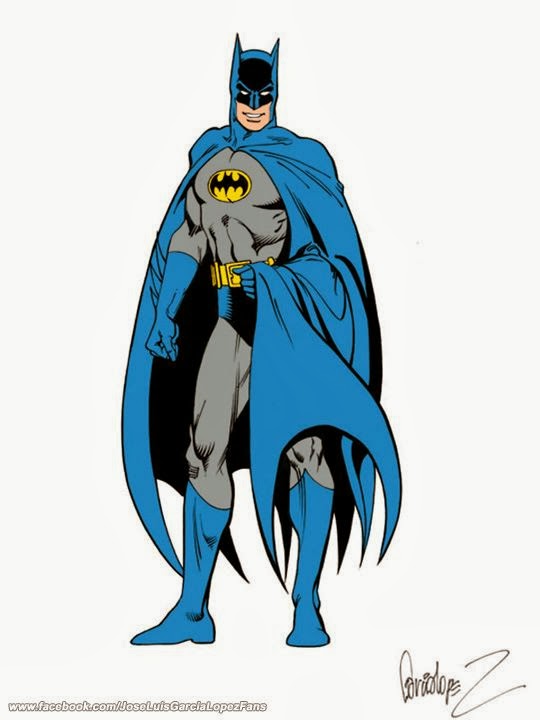
That is not the actual cover to Glen Weldon's Batman book. In my humble opinion, I fixed it. I made it into a cover image I wanted to see, just like when I fixed the cover to Michael Moorcock's rubbish Doctor Who novel into something I might keep on my shelf (but I didn't). Who are all those guys cosplaying as Batman? I don't know them. They're not Batman. The new cover - that depicts the Batman.

That's really the point of Weldon's book. The lean page-count is due to the lack of biographical material; the real focus is on the different incarnations of Batman thru the decades, from dark to light to dark to light to dark again snd so on. He's a resilient, nonchalant character - adept at mystery, sci-fi and fantasy stories with a simple turn of the screw. I don't think he really cracks the code as to why that is so, but he's more interested on how audience opinion can influence the lifespan of each incarnation anyway. It's this school of thought where Batman is an idea that exists within the public conciousness..as if he's bigger than comics or films or videogames...Weldon doesn't say it, but the character is recognized the same way globally as Mickey Mouse, James Bond, Sherlock Holmes, Superman, Elvis, Marilyn Monroe and Michael Jackson. He's joined that club. A lot of people don't read the comics, but they are cognizant of the existence of a character named Batman.

It's what Batman is that has the nerds debating about it, and Weldon doesn't quite ridicule those arguments, but it's hinted as very closed-minded thinking. The best depiction of a fully-realized Batman, at his most basic, is the Batman of Batman: The Animated Series. After that, you're probably just going for extremes for the sake telling new stories.

The downside to this book is that it's nothing you wouldn't learn from reading a Wikipedia article. Without biographical material to gain insight into why people who worked on Batman approached the character the way they did, it's very, "...during this run, this guy wrote Batman like this.." And another thing...I seriously doubt anyone enjoys being called a nerd. The bozos selling t-shirts and apparel in an attempt to brand "Geek" "Nerd" and "Spaz" wouldn't be caught dead feigning interest in this stuff if they couldn't make a buck. I don't buy it. It's a slam for knowing anything.

And yet, the fact that people know Batman is what's kept him from stagnating like Superman, Bond and the Mouse. Alan Moore put it best when he described Batman as a character created to appeal to children in 1939 who were reading Superman comics...Batman's longevity is astounding if you consider that he's past his "Sell-by.." date. I don't know if Weldon has seen that distinction between a  concept that can survive being branded and still have a place in contemporary fiction...maybe he'd have been hesitant to use the word "nerd" so much...or maybe he doesn't..between the lines, once you get to the end of the book, it feels like he's saying all the Batman stories that could be told have been told.

Thursday, December 15, 2011

The Boy Who Helped Make Good Batman Movies

I just read Michael Uslan's memoir, "The Boy Who Loved Batman," and maybe a more apropos title would be "The Boy Who Dreamed About Batman"...actually, that doesn't sound right...on with the review..

I came out of reading the book thinking that Uslan was portraying himself as a fan who made it - this is the guy who grew up loving comics and was never tempted to move on and managed to successfully parlay his hobby into a career as a Hollywood producer. And he wants to tell the story of a pop culture guru/whizkid who anticipated everything and saw it all coming years before everyone else. And the story of an average supernerd who gets lucky and lives out the fanboy fantasy of authenticating, validating, and vindicating the stuff of his youth and young adulthood, hitting paydirt via luck, social networking savvy and spunk more than anything else.

Uslan's greatest contribution as an executive was as a catalyst and support system - if any director had grand ideas for a Batman movie, it was Uslan who could step up as the happy warrior and fight for him, but only if those ideas appealed to his own reasoning. In Hollywood, if you don't have the support of SOMEBODY, a "warrior" behind one of those desks to push an idea, it can stay in "development hell" long after you're gone.  He had been championing the concept of doing a serious Batman film for years, but in my opinion, could never articulate it well enough for it to be realized until the arrival of Tim Burton. It was not a perfect union - Uslan hints that this relationship got ugly when Burton chose Michael Keaton for the title role. It took a hell of a lot of convincing to get Uslan and the other executives to see otherwise, and by that time so much money and energy and resources had been invested in the project, they had to go along with the decision if they ever hoped to recoup.

Uslan should be a familiar face to fans of superhero movies who watch DVD bonus features and documentaries on superheroes and comic books. He's one of the guests who offer socio-psychological-historic rhetoric on the enduring popularity of these characters - all of which falls apart the moment you actually get in the habit of reading the books or walking into any comic shop, unfortunately. I always wondered how marketing and collecting hoopla, large balloon breasts, promotional gimmicks, stunts fit in with all that talk of "Modern-day Folklore".  Uslan often drops numerical values of old comics throughout the book. Money gets mentioned a lot here, and it goes against the grain when he talks about passion and fidelity to portrayals of comic book characters.

Ironically, I  found that I could relate to Uslan in the sense that the love of Batman that we get from the book is of a Batman that exists in Uslan's imagination - he can point to Christopher Nolan's Batman and Tim Burton's Batman and Dennis O'Neil's and Steve Englehart's and say, "That's my Batman!", and he could point to an inconsistent sampling of 20 comics through the decades and say that his Batman is there, too. That list appears in the last third of the book, and it reads like a blog entry than what it should have been: a book itself, offering commentary and analysis as to what he finds in these choices a distillation of the Batman of his dreams. Then, we would have a more powerful book, and not a "The Kid Stays In The Picture"/"Field Of Dreams"-esque mish-mash. We also get invited to peek at his collection of boilerplate correspondence, autographs, memorabilia and false career starts and comics - can you imagine what it would've been like if he hadn't made it and this stuff was just rotting away in his house (or his parents house)? We would've lost a warrior.

Thursday, October 27, 2011

Graphic Blandishment featuring Superman Issue #1

My pet theory about the origin of the words "Graphic Novel", is that the word 'Graphic' came from Will Eisner's book, Graphic Storytelling, and the word 'Novel' came from DC Comics habit of refering to issue-length comic book stories as "Full-Length Novel". Feel free to quote me on Wikipedia.

This "Full-Length Novel" jazz reminded me of how the Charlie Brown TV specials would sometimes credit animators under the words "Graphic Blandishment" instead of "Animators"/"Animation By:". An average issue of a comic book - a novel? No,no,no,no,no. We need to wrap this baby in a card stock cover and add offbeat story content before calling it novel! Now, ain't that sumptin'! Oh, and quintuple the cover price. I think I would've just settled for calling an average comic a Novel and calling it a day. "Yes Mother, I finished reading the latest Little Dot novel!"

The library had a copy of SUPERMAN: KRYPTONITE NEVERMORE! by Dennis O'Neil and Curt Swan (and, I suspect, key plot assistance by editor Julius Schwartz). It's not very good, but I didn't hate it. The best moment happens early on, when Superman takes a bite out of a chunk of green K as if it were an oversize Cap'n Crunch Berry. The book collects stories that attempted to sharply redefine Superman, but rather than modify the approach to storytelling, they opt for taking away his often overused weakness, and take away the range of his powers. None of the foes from his rogues gallery appear. Instead, the only suspense comes from an eerie doppelganger/adumbration of Superman made from sand that's more powerfull than him, but that ends in a cop-out. It wasn't Superman the whole time! It was some befuddled chap from Quarmm. And with that all sorted out, Denny bids the books adieu, and this trickly experiment becomes the stuff of online blogs and back issue fodder.

It's as though Denny didn't have it all figured out, and his afterward in the book offers no insight into each of the stories in this collection, just that the top brass at DC was hoping he would trap lightning in a bottle again, the way he had done with Batman, but not like his revamp of Wonder Woman...or Green Lentern/Green Arrow (actually, the latter two have become cult fan-favorites, they were poorly recieved at the time and come off dated - an aquired taste). I thought he fared better writing Superman team-up stories in World's Finest and DC Comics presents, where the pressure was off and he was free to just tell stories. By comparison, the stories here read like they were re-written by the editor to fit the wants and needs. It doesn't read like an O'Neil's script, except for the small scenes with Morgan Edge, Clark's then-new boss at the GBS network.

What the comics in this collection did achieve was the staus quo Julius Schwartz used for Superman comics throughout his run as editor. Morgan Edge, Clark Kent: GBS news reporter, odd one-shot villains, unusual monsters, Superman's self-doubt, Batman cameos - all that stuff figures in the comics for the next 15 years! This experiment didn't wipe away Superman's powers and weakness for long, but it did set the pace of the comics themselves. For a while, anyway.. ;) If your library has it, check it out.